Key properties of gallium
- Atomic number / weight
- 31 / 69.72
- Melting point
- 29.76 °C (85.6 °F)
- Boiling point
- About 2,400 °C
- Density (solid)
- 5.91 g/cm³; liquid is denser
- Volume change on freezing
- Expands about 3.1%
- Reactivity
- Attacks aluminium; wets glass and skin
- Toxicity
- Low; wear gloves to avoid staining and irritation
What are the main properties of gallium?
Gallium is a soft, silvery group 13 metal that melts at 29.76 °C and boils near 2,400 °C, giving it one of the widest liquid ranges of any element. It has a solid density of 5.91 g/cm³, expands about 3.1% on freezing and has low toxicity.
These properties decide how gallium is cast, shipped and stored, and they explain why it is valuable in electronics. Gallium itself is rarely used as a pure metal in devices; its value comes from the compounds it forms, covered in gallium forms and grades.
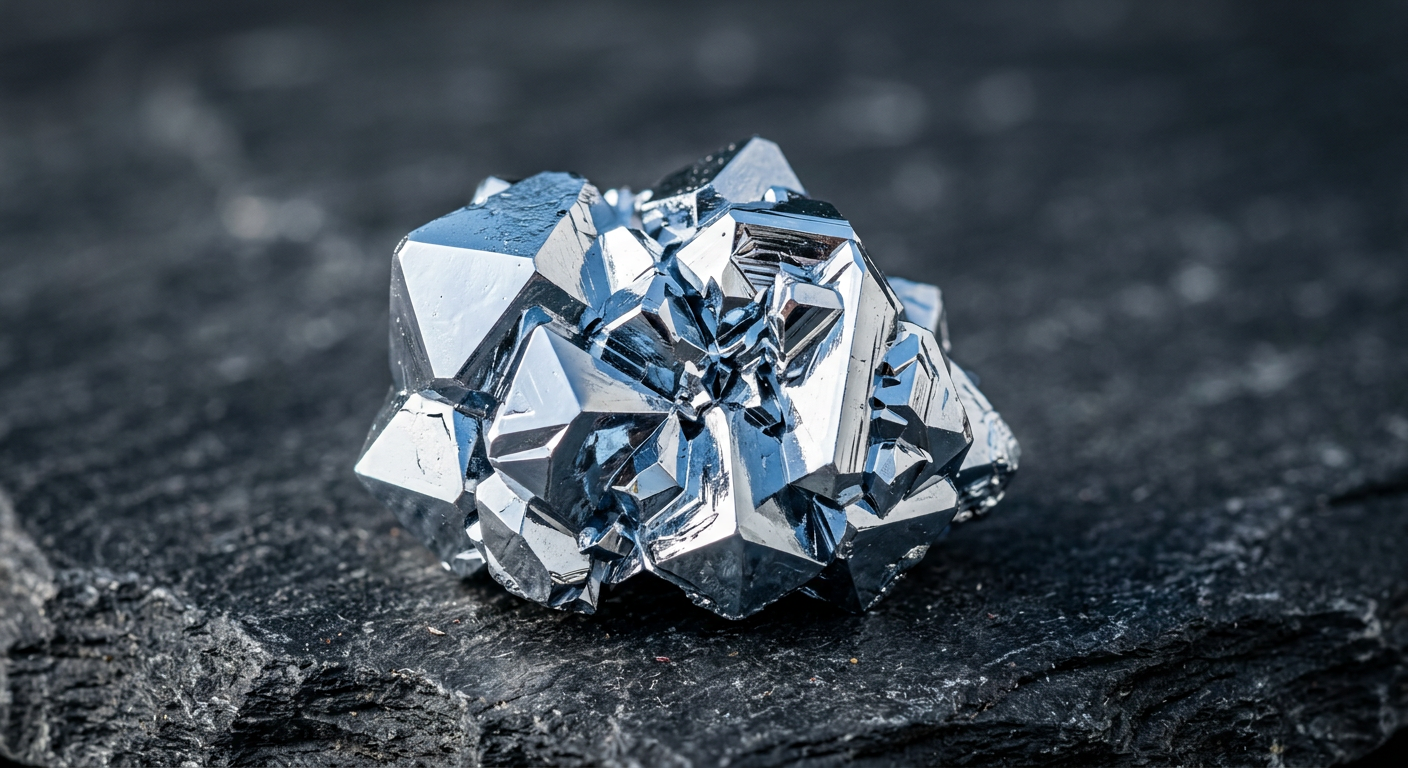
Why does gallium melt in your hand?
Gallium melts in your hand because its melting point, 29.76 °C, is below human body temperature of about 37 °C. Its atoms form weakly bonded pairs in the solid crystal, so little energy is needed to break the structure and turn it into liquid.
Once melted, gallium can stay liquid well below its melting point, a state called supercooling. A sample may remain liquid at room temperature for days until a seed crystal or vibration triggers solidification.
Why does gallium expand when it freezes?
Gallium expands by about 3.1% when it freezes because its solid crystal structure is more open than the liquid arrangement. The liquid is therefore denser than the solid, a rare trait shared with water, silicon, germanium and bismuth.
This has a direct practical consequence. A rigid container filled to the brim with liquid gallium can crack or split as the metal solidifies. Suppliers ship gallium in flexible plastic bottles or bags with headroom for that reason. Our guide to gallium storage containers explains what to use and what to avoid.
How does gallium react with other materials?
Gallium is fairly stable in air, forming a thin protective oxide film, but it aggressively attacks aluminium and many other metals by diffusing into their grain boundaries. Liquid gallium also wets glass, ceramics and skin, leaving a gray stain that is hard to remove.
Key points for anyone handling the metal:
- Aluminium. Even a small amount of gallium makes aluminium brittle. Keep it away from aluminium shelving, foil and cases.
- Glass. Gallium sticks to glass, so pouring it cleanly from a glass vessel is difficult.
- Acids and alkalis. Gallium dissolves in both, forming gallium salts or gallates.
- Oxygen. The surface oxide grows slowly and lowers purity at the surface, which is why high-purity metal is sealed under inert gas.
Is gallium toxic?
Gallium metal has low toxicity and is not considered a serious health hazard in normal handling. It can irritate skin and eyes and leaves stains, so gloves and eye protection are recommended. Some gallium compounds, especially gallium arsenide, are more hazardous because of their arsenic content.
Read the supplier’s safety data sheet before handling any lot, and see how to store gallium safely for practical steps.
Why do gallium’s properties matter to investors?
Gallium’s properties matter to investors because they set storage costs and resale value. Metal that has been melted in an unsuitable container, contaminated by aluminium or left unsealed may lose purity, and buyers pay less for lots that no longer match their certificate of analysis.
The same properties explain demand. Gallium forms semiconductors with wide bandgaps and high electron mobility, which is why chipmakers value it. Return to the gallium overview for context, or check the current gallium price to see what intact, certified metal is worth.