The gallium investor journey
- Understand the metal and why chipmakers need it
- Check today’s Western and Chinese prices
- Write down your investment thesis and exit plan
- Decide on a position size you can hold for years
- Choose a route: physical metal or equities
- Vet a supplier and agree purity, documents and delivery
- Store, insure and record the metal properly
- Review the thesis as export policy and prices change
What does it mean to invest in gallium?
Investing in gallium usually means buying physical gallium metal, typically 4N (99.99%) or higher purity, and holding it in the expectation that its price rises. Some investors instead buy shares in companies that refine gallium, but no fund holds the physical metal for you.
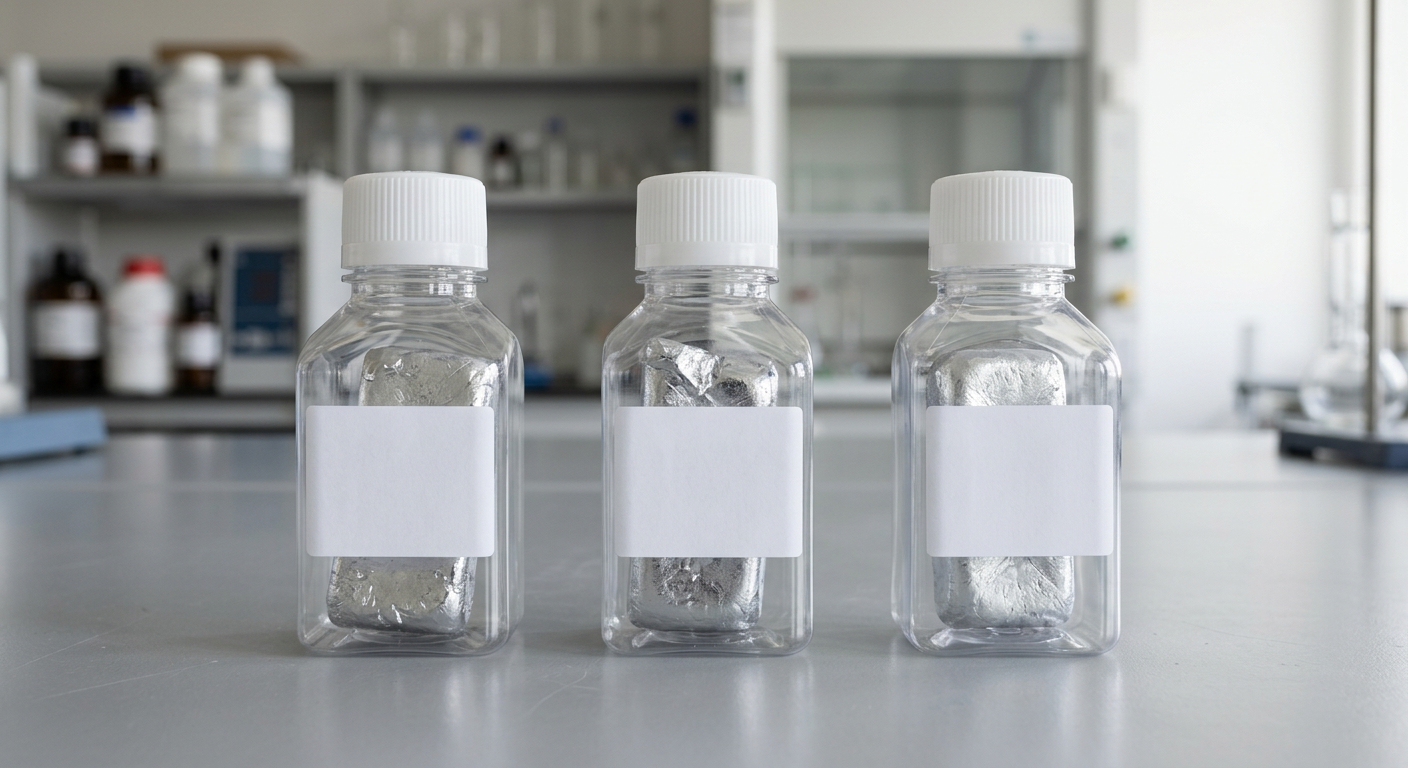
Gallium is a soft, silvery metal that melts at 29.76 °C. It is not mined on its own: it is recovered in tiny amounts from the liquor of alumina refineries, where bauxite contains about 50 parts per million. World primary output was about 900 tonnes in 2025, which makes gallium a very small market compared with gold or silver.
That small size is the source of both the opportunity and the risk. Our guide to what gallium is covers the basics in more depth.
Why are investors interested in gallium?
Investors are interested because gallium is essential to modern chips and almost all supply comes from one country. China produces about 99% of primary gallium, has required export licences since August 2023 and banned shipments to the United States in December 2024, pushing Western prices sharply higher.
Demand comes mainly from semiconductors. In the United States about 74% of gallium goes into integrated circuits and 25% into optoelectronics such as LEDs and laser diodes. Gallium nitride and gallium arsenide are used in 5G radio, fast chargers, power electronics and defense systems.
On the supply side, Western producers closed one by one: Kazakhstan in 2013, Hungary in 2015, Germany in 2016 and Ukraine around 2022. The United States has had no primary production since 1987 and imports 100% of the roughly 19,000 kg it uses each year.
Source: USGS Mineral Commodity Summaries 2025
How much does gallium cost to invest in?
As of November 2026, 4N gallium costs about $230–250 per kilogram inside China and roughly $1,300–1,550 per kilogram delivered in Europe or the United States. Western investors pay the Western price, which reached a record of about $2,100 per kilogram in Rotterdam in March 2026.
That split market is unusual and it can change quickly if China eases or tightens its controls. Current figures and sources are on our gallium price page.
What are the ways to invest in gallium?
There are two realistic routes: buying physical gallium from a supplier and holding it, or buying shares in mining, alumina and refining companies with gallium exposure. There is no gallium ETF that holds physical metal and no exchange-traded gallium futures contract.
Our step-by-step guide on how to invest in gallium compares both routes, including minimum lot sizes, documents and storage.
Is gallium a good investment?
Gallium can suit a small, long-term allocation for investors who accept high volatility, a wide buy-sell spread and slow resale. Its appeal rests on concentrated supply and chip demand; its weaknesses are illiquidity, policy-driven prices and the absence of any income or exchange market.
We set out the bull and bear cases in detail in is gallium a good investment?, and the key questions to answer before you buy in our gallium investment thesis checklist.
How much of a portfolio should go into gallium?
Most investors who hold gallium treat it as a small satellite position, often a low single-digit percentage of a portfolio or less. The right size depends on how long you can hold, whether you could absorb a large price fall and how easily you could sell.
Our page on gallium portfolio allocation explains how to size a position and how gallium fits beside precious metals and equities.
How does gallium compare with other metals?
Gallium behaves more like a specialty industrial metal than a precious metal. Gold and silver trade on deep, liquid exchanges; gallium, indium and germanium are small by-product markets with negotiated prices, few buyers and supply dominated by China.
Read the side-by-side comparisons:
- Gallium vs gold: store of value versus strategic industrial metal.
- Gallium vs silver: two industrial metals with very different liquidity.
- Gallium vs indium: two by-product metals tied to electronics.
- Gallium vs germanium: the two metals hit by the same Chinese export controls.
What should you do before buying gallium?
Before buying, confirm the purity you want, ask for a certificate of analysis, agree delivery terms and plan where the metal will be stored. Gallium expands about 3.1% when it freezes and attacks aluminium, so containers and storage conditions matter.
Then read about the main gallium investment risks and, when you are ready, request a quote from a vetted provider.
This site provides general information, not personal financial advice. Read our disclaimer before acting on anything here.