Commercial forms of gallium compared
| Form | What it is | Who buys it | Suitable for investors? |
|---|---|---|---|
| Gallium metal (4N–7N) | Pure elemental gallium, cast as ingots or sealed in bottles | Refiners, wafer and chemical makers, alloy producers, traders | Yes. The standard investment form, priced against published 4N benchmarks |
| Gallium oxide (Ga2O3) | White powder or single-crystal wafers of gallium and oxygen | Chemical makers, phosphor producers, power-device researchers | Rarely. Small specialist market, no published benchmark |
| Gallium nitride (GaN) | Wide-bandgap semiconductor grown as thin films or wafers | LED, RF and power-chip manufacturers | No. A manufactured device material, not a store of value |
| Gallium arsenide (GaAs) | Compound semiconductor sold as wafers or polycrystal | RF chip, laser and solar-cell manufacturers | No. Contains arsenic; hazardous and hard to resell |
| Precursors (e.g. trimethylgallium) | Organometallic liquids used to grow GaN and GaAs films | Epitaxy and wafer fabs | No. Pyrophoric, specialist handling only |
Almost all private investors hold 4N–6N gallium metal with a certificate of analysis.
What forms does gallium come in?
Gallium is traded in four main forms: high-purity metal, gallium oxide, gallium nitride and gallium arsenide, plus organometallic precursors used in chip fabs. The metal is the starting point for all the others, and it is the only form with published benchmark prices.
Every gallium product begins as crude metal recovered from alumina refining, typically around 99.9% pure. That crude metal is refined to 4N (99.99%) and higher, and then either sold as metal or converted into compounds. Each step adds cost and narrows the pool of buyers.
The table above compares the forms side by side. Each one has its own page:
- Gallium metal: the form investors buy, and the feedstock for everything else.
- Gallium oxide: a chemical intermediate and an emerging ultra-wide-bandgap semiconductor.
- Gallium nitride: the material behind LEDs, fast chargers and 5G power amplifiers.
- Gallium arsenide: the established RF and optoelectronic semiconductor, with arsenic hazards.
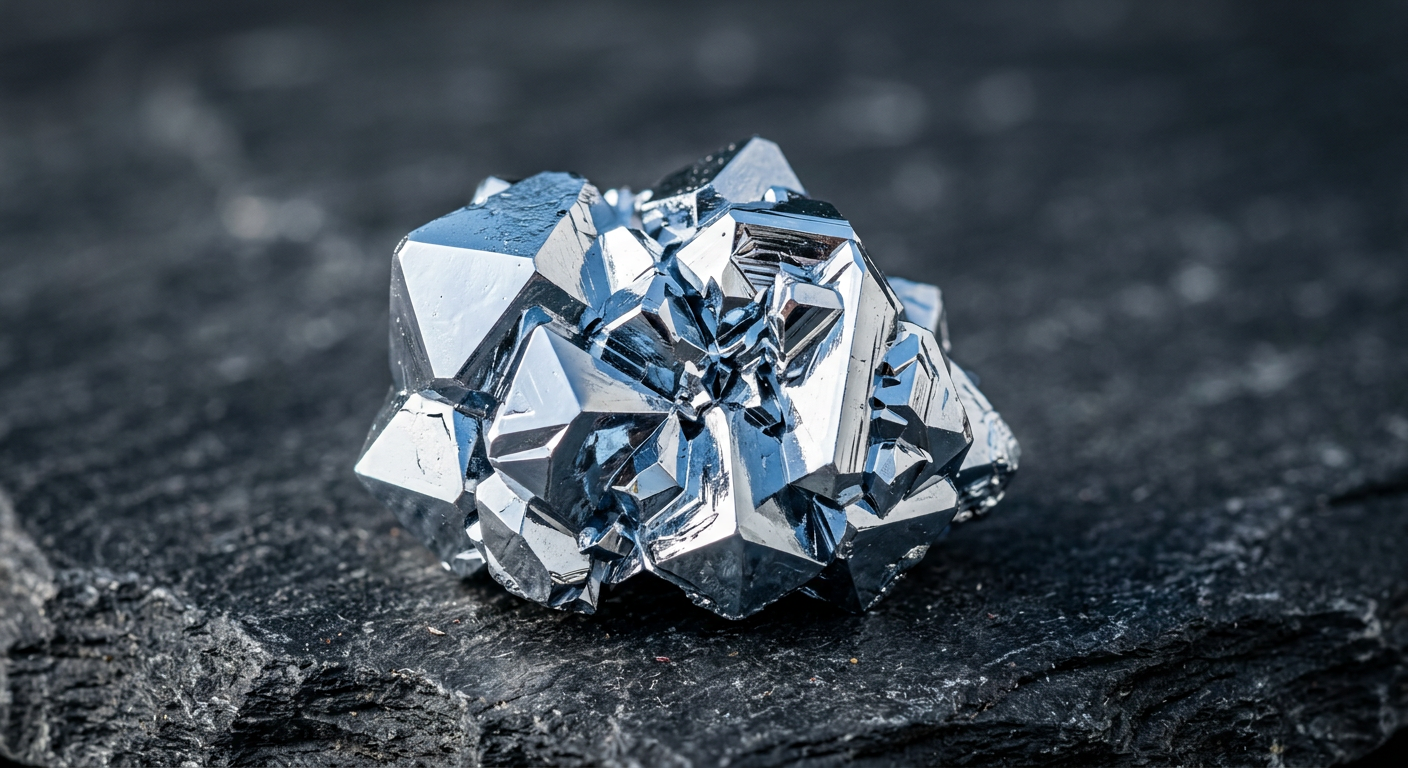
Which form of gallium should an investor buy?
An investor should almost always buy gallium metal, usually 4N to 6N ingots or bottles with a certificate of analysis. Metal is priced against published benchmarks, stores well in sealed containers and can be sold to refiners, compound makers and traders.
Compounds are poor investments for three reasons. First, they are manufactured products priced on specification, not on a public benchmark, so you cannot easily tell whether a price is fair. Second, buyers of GaN and GaAs wafers are chip fabs that qualify their own suppliers and will not buy from private holders. Third, some compounds degrade or carry hazards that make storage costly. If you want exposure to demand for GaN or GaAs, holding the metal that feeds those industries is the practical route.
Our guide to buying gallium in the right form covers ingot sizes and packaging in more detail.
What do gallium purity grades mean?
Gallium purity grades use the “N” system, where the number counts the nines in the purity percentage. 4N is 99.99% pure with up to 100 parts per million of impurities; 5N is 99.999% (10 ppm); 6N is 99.9999% (1 ppm); and 7N is 99.99999% (0.1 ppm).
| Grade | Purity | Max impurities | Typical use |
|---|---|---|---|
| 4N | 99.99% | 100 ppm | Alloys, magnets, chemical feedstock |
| 5N | 99.999% | 10 ppm | LEDs, solar, general electronics |
| 6N | 99.9999% | 1 ppm | GaAs and GaN wafers |
| 7N | 99.99999% | 0.1 ppm | Epitaxy and research |
Source: Standard purity notation; uses are typical, not exclusive
Higher grades command a premium because each extra nine requires additional refining, typically zone refining or single-crystal pulling, and more expensive testing. 4N is the benchmark grade quoted in most published prices. 6N and 7N metal goes mainly to semiconductor wafer makers. Our page on gallium purity grades explains which grade suits which buyer.
How do you check that gallium matches its stated form and grade?
You check gallium against a written specification and an independent certificate of analysis. The certificate should list purity, the concentration of each tested impurity in ppm, the analytical method, the lot number and the packaging, and it should match the label on the container you receive.
Common methods include glow discharge mass spectrometry (GDMS) for 6N and 7N metal and inductively coupled plasma mass spectrometry (ICP-MS) for lower grades. A reputable seller will name the laboratory. Read our guide to gallium specifications for a line-by-line explanation of what a good spec sheet contains, and the COA and SDS checklist before you pay.
How does the form affect the price you pay?
The form sets which price applies to you. Published benchmarks cover 4N gallium metal; higher-purity metal sells at a premium, and compounds are quoted individually on specification. Compound prices are rarely published, so any figure is an estimate rather than a market price.
As of November 2026, 4N metal costs about $230–250 per kilogram inside China and roughly $1,300–1,550 per kilogram delivered in Europe or the United States. Small lots, extra purity and documentation all add to this. Check the current gallium price before comparing quotes, and remember that what you can recover when selling depends on the form and grade you hold.
Why does form matter so much in the gallium market?
Form matters because gallium is an industrial material, not a monetary metal. Each buyer needs a specific form, purity and package, and will pay full price only for material that matches. Metal that fits common industrial specifications keeps the widest resale market.
This differs from gold or silver, where any standard bar is broadly interchangeable. For a physical gallium holder, choosing the wrong form or an undocumented grade is one of the easiest ways to lose value. Start with the metal, insist on a certificate, and keep the packaging intact. When you are ready, our step-by-step guide explains how to buy physical gallium. This is general information, not investment advice; see our disclaimer.