Gallium metal at a glance
- Typical grades
- 4N (99.99%) to 7N (99.99999%)
- Benchmark grade
- 4N, quoted in most published prices
- Supplied as
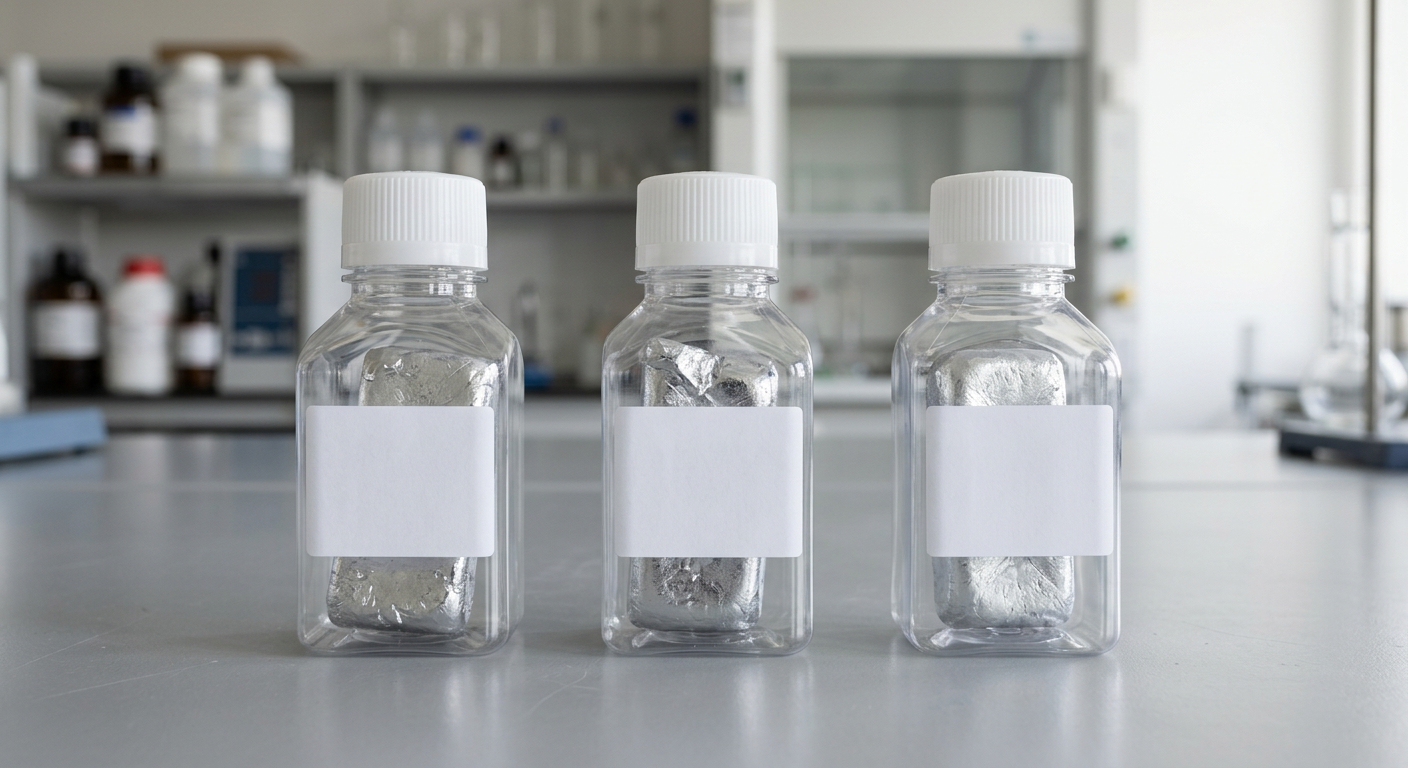
- Cast ingots, pellets or liquid in sealed plastic bottles
- Melting point
- 29.76 °C; may arrive liquid in warm weather
- Key storage rule
- Never fill a rigid container to the brim; it expands ≈3.1% on freezing
- Main buyers
- Refiners, wafer makers, chemical producers, alloy makers, traders
What is gallium metal?
Gallium metal is pure elemental gallium, refined from crude by-product metal to purities of 4N (99.99%) or higher. It is sold as solid ingots or as liquid sealed in plastic bottles, and it is the feedstock for every gallium compound used in electronics.
Crude gallium recovered from alumina refineries is usually around 99.9% pure. Refiners raise it to 4N through electrolysis and filtration, then to 6N and 7N through repeated crystallization or zone refining. The gallium forms hub shows where the metal sits relative to the compounds made from it.
Why is gallium metal the best form for investors?
Gallium metal is the best form for investors because it is the only form with published benchmark prices, it has the widest pool of industrial buyers, and it stores without degrading in a sealed container. Compounds are specification-driven products sold mainly between manufacturers.
Holding metal gives exposure to every downstream use at once: GaAs chips, GaN power devices, LEDs and solar cells all begin with it. A certified 4N or 5N ingot can be resold to refiners who upgrade it, while 6N and 7N metal goes directly to wafer makers. That flexibility is what makes the metal liquid enough to hold, although it remains far less liquid than gold or silver.
How is gallium metal packaged and shipped?
Gallium metal is usually packaged in sealed polyethylene or polypropylene bottles, or cast into ingots and vacuum-sealed or double-bagged under inert gas. Containers are filled with headroom so the metal can expand about 3.1% when it freezes without cracking the package.
Things to check when a lot arrives:
- The lot number on the container matches the certificate of analysis.
- The seal is intact and the package has not leaked.
- The metal has not touched aluminium, which gallium attacks.
- The gross and net weights match the invoice.
Our guide to gallium shipping and delivery covers carriers, customs classification and insurance in transit.
How much does gallium metal cost?
Gallium metal is priced per kilogram, with 4N as the benchmark. As of November 2026, 4N metal costs about $230–250 per kilogram in China, about $430–450 for licensed Chinese exports and roughly $1,300–1,550 per kilogram delivered in Europe or the United States.
Higher grades, small lots and full documentation all add a premium. 6N and 7N prices are rarely published, so treat any figure as an estimate. Follow the gallium price page for current consensus ranges and the reasons behind the gap between China and the West.
How should you store gallium metal?
Store gallium metal in its original sealed plastic container, upright, in a cool, dry place below its 29.76 °C melting point if possible. Keep it away from aluminium, avoid glass vessels, and never transfer liquid metal into a rigid container filled to the top.
If the metal melts in transit, leave it sealed and let it solidify slowly; a small seed crystal speeds this up. Do not open high-purity packages unless necessary, because surface oxidation and contamination lower the value. See how to store gallium safely for a full routine.
What should you ask a seller of gallium metal?
Ask a seller for the purity grade, a lot-specific certificate of analysis naming the laboratory and method, the country of origin, the packaging type, the net weight per unit and the delivery terms. These details determine the price you should pay and what you can recover on resale.
When you have those answers, compare offers with our step-by-step guide to buying gallium, or request a quote for certified metal.