- Bauxite ore≈ 50 ppm gallium
- Bayer alumina refineryGallium collects in the liquor
- ExtractionIon exchange, then electrolysis
- Primary gallium99.9–99.99% (3N–4N)
- RefiningCrystallisation, zone refining
- High purity6N–7N for wafers
Source: USGS; industry process descriptions
How is gallium produced?
Gallium is produced as a by-product of alumina refining. Bauxite holds about 50 ppm gallium; during the Bayer process it dissolves into the caustic liquor, and a recovery circuit extracts it by ion exchange and electrolysis to give primary metal of 99.9–99.99% purity.
A smaller amount comes from zinc refining residues. No mine produces gallium as its main product, because concentrations are far too low to justify mining for gallium alone.
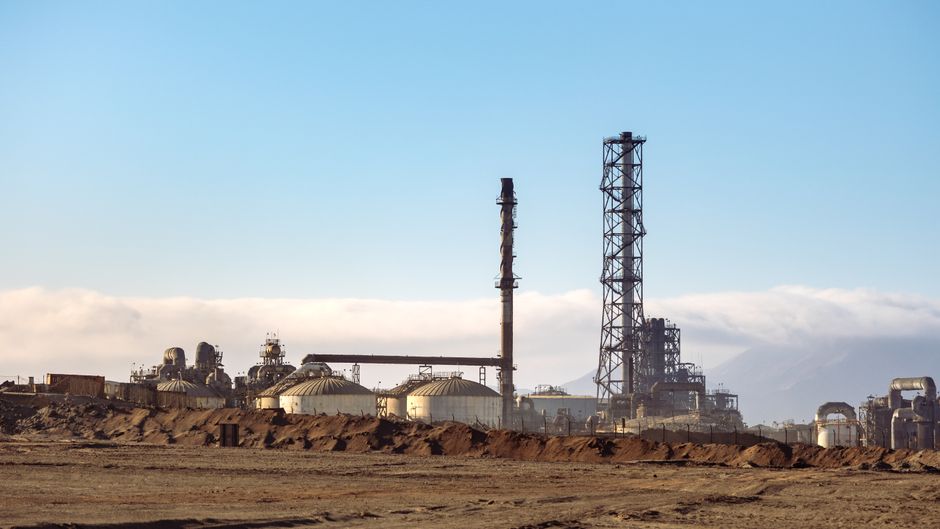
What are the steps in gallium extraction?
Gallium extraction has four main steps: digesting bauxite in hot caustic soda, letting gallium build up in the recycled Bayer liquor, capturing it on an ion-exchange resin, and electrolyzing the stripped solution to deposit liquid gallium metal, which is then filtered and cast.
In practice:
- Digestion. Bauxite is dissolved at high temperature and pressure; alumina and gallium go into solution.
- Concentration. Gallium is not removed with the alumina, so it accumulates as the liquor recirculates.
- Ion exchange. A side stream of liquor passes through a resin that holds gallium selectively.
- Electrolysis. The concentrated gallium solution is electrolyzed to metal, then washed and filtered.
The resulting 3N–4N metal is either sold as primary gallium or sent on for high-purity refining.
How much gallium is produced each year?
World primary gallium output was about 900 tonnes in 2025, according to USGS, almost all of it in China. Chinese capacity is about 1,600 tonnes a year, so the country runs well below its maximum and could raise output if prices or policy favored it.
Recovery rates also matter. Only part of the gallium in bauxite ends up as metal, and most of the world’s alumina refineries, inside and outside China, have no recovery circuit at all, so their gallium stays in the alumina or waste streams.
Output outside China is small and comes from Japan, South Korea and Russia. Country detail is on our major gallium producers page.
Why is gallium production concentrated in China?
Gallium production is concentrated in China because it has the world’s largest alumina industry and, during the 2010s, added recovery circuits at many refineries. The resulting surplus pushed prices below Western break-even, and plants in Hungary, Kazakhstan and Germany closed between 2013 and 2016.
Ukraine’s output stopped around 2022. The United States has had no primary production since 1987 and imports all of its roughly 19,000 kg annual consumption.
Can production outside China be increased?
Yes. Any Bayer alumina refinery can in principle add a gallium recovery circuit, and Alcoa is developing one in Western Australia with US, Australian and Japanese government support. The limits are capital cost, a reliable buyer at a price above Chinese levels, and years of construction.
That is why Western policy now leans on offtake agreements and price floors. See the gallium market overview for how these measures fit together.